
🎙️ ipostthisweek · Podcast Hub
A curated collection of reflective, literary, and philosophical audio journeys — exploring stories, symbols, technology, and the emotional architecture behind the worlds we build.
Family & Identity

Love against Lore
Show episode summary
Clan of Mésalliance is a psychological family drama that examines the
fragile architecture of belonging — the ways we inherit expectations, resist them, and
sometimes break under their weight. This episode explores the emotional terrain where
love collides with tradition, and where personal truth becomes a quiet rebellion against
the lore that binds a family together.
At its core, the story follows characters who are each negotiating their own fractures:
the longing to be seen, the fear of disappointing those they love, and the courage it
takes to step outside the roles assigned to them. Through their intertwined journeys,
the novel reveals how community can both wound and heal, and how chosen bonds can become
more powerful than inherited ones.
This episode reflects on the universal struggle between loyalty and selfhood — and the
unexpected ways people find connection when the old structures no longer hold.
Orphania's Hidden Mirror
Show episode summary
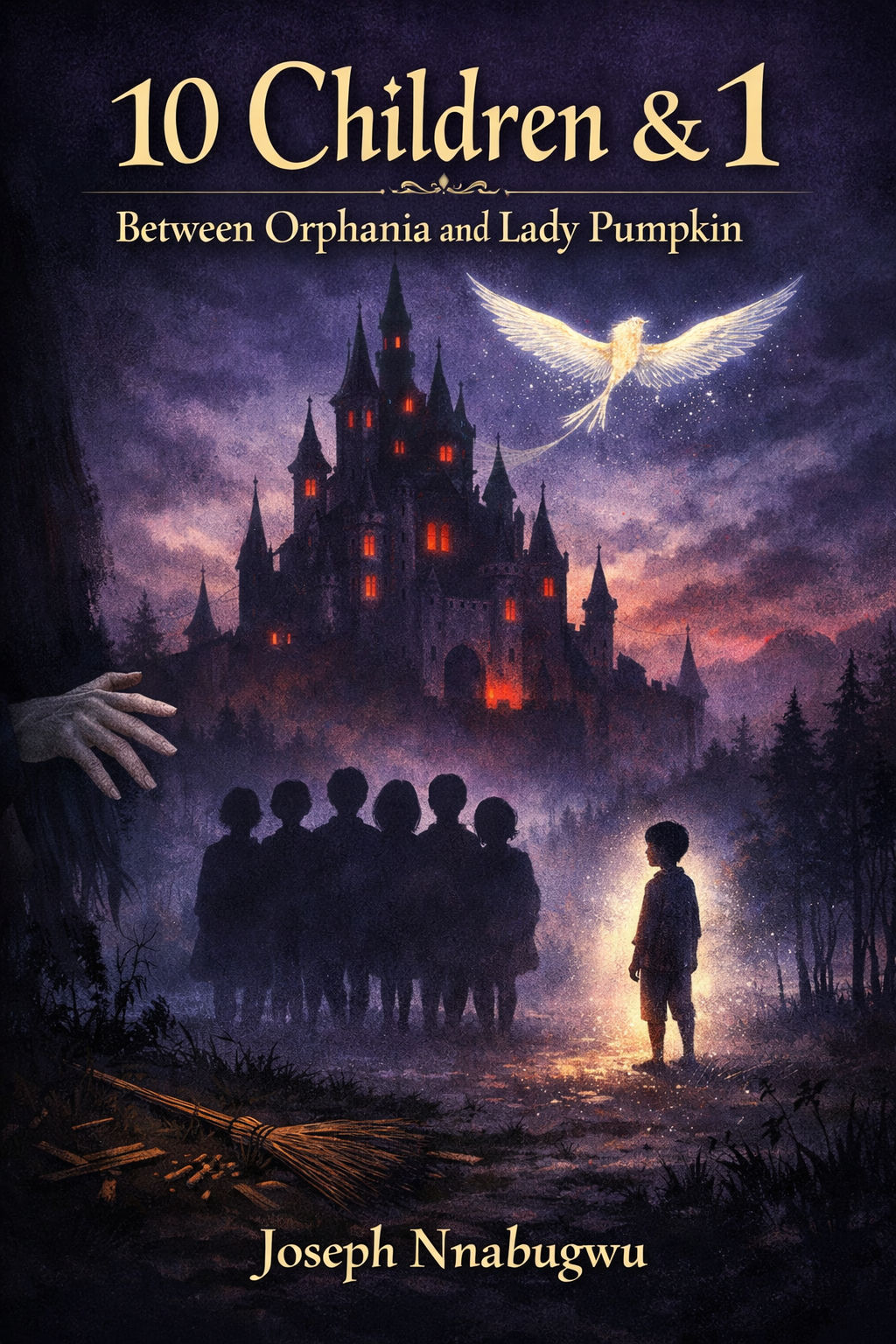
Orphania's Hidden Mirror Step into the haunting, imaginative world of 10 Children & 1: Between Orphania and Lady Pumpkin, a surreal tale where childhood wounds take shape as fantastical landscapes and mysterious figures. In this episode, we explore the story’s dreamlike journey, decode its symbolic characters, and unpack the deeper themes of memory, identity, and healing. Whether you’re discovering the book/play for the first time or revisiting it with fresh eyes, this podcast offers a thoughtful, atmospheric dive into one of the most intriguing modern allegorical works.
Childhood Trauma and Healing
The children’s journey is an allegory for confronting emotional wounds. Each realm externalises an inner struggle — fear, loss, identity, belonging.
The Lure of Escapism
Lady Pumpkin’s world represents the seductive pull of fantasy, distraction, and avoidance. It’s colourful, comforting, and dangerous in its stagnation.
Memory as a Landscape
Orphania is built from forgotten or suppressed memories. The story suggests that healing requires revisiting — not erasing — the past.
Identity and Self-Discovery
The children must reclaim their names, voices, and stories. The “One” guides them toward self-recognition.
Collective vs. Individual Growth
Though each child has a personal arc, their survival depends on cooperation. The story emphasises community healing rather than solitary heroism.
The Threshold Between Worlds
The space “between Orphania and Lady Pumpkin” symbolises transition — the uncomfortable but necessary middle ground between who we were and who we are becoming.
Conclusion
10 Children & 1 is a rich, layered narrative that uses surrealism to explore the complexities of childhood trauma and the path to healing. It invites readers to confront their own “Orphanias” — the hidden, often uncomfortable spaces where our past lives on — and to find strength in vulnerability, memory, and connection.
Fables & Allegories

Emilokon Termites Fable: A Cautionary Tale of Leadership and Decay
Show episode summary
Emilokon — or *The Fable of the Termites* — is a symbolic exploration of how leadership, power, and collective responsibility can erode from within. This episode unpacks the hidden “termites” that weaken institutions, the slow decay of values, and the lessons societies often ignore until collapse is already underway.
Mice, Power and fable
Show episode summary
Mice, Power and Fable
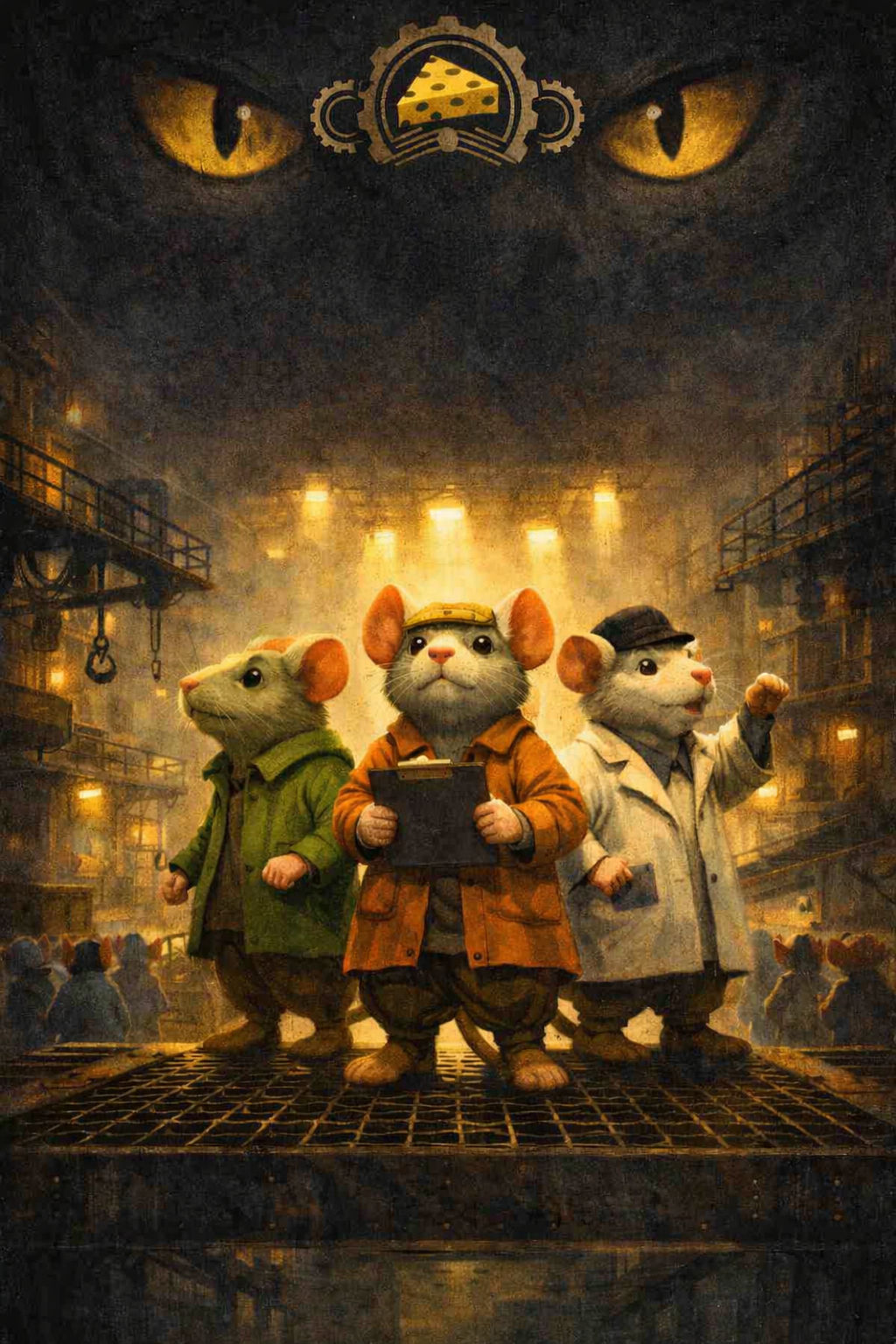
The Grumbling Warehouse is a short but surprisingly rich fable set in middle England — except the workers aren’t people… they’re mice. And their workplace? A fish warehouse with strict rules, rigid hierarchies, and a whole lot of complaining.
The World of the Warehouse
In this story, every mouse is automatically “qualified” simply by being a mouse. But that doesn’t mean they’re treated equally. The warehouse is divided into four groups:
- Managers — generate the work
- Principals — supervise
- Stewards — do the actual labour
- Marshals — control the security posts
This structure mirrors real-world workplaces where titles and hierarchy shape everything — from who gets heard to who gets blamed. The stewards, unsurprisingly, are the ones doing the heavy lifting. And they’re not happy about it. They grumble about:
- low wages
- tedious work
- the warehouse’s official language, Kangles
- the principals’ attitudes
A Mouse-Sized Mirror of Society
As the story unfolds, the warehouse becomes a microcosm of society. The book touches on:
- politics (territory annexation)
- economics (taxes, wages)
- sports (the “mouse Olympic”)
- inter-species conflict (ants vs termites, cats vs mice)
These aren’t random plot points — they’re allegories. The conflict between ants and termites? A metaphor for tribal or national rivalries. The cats and mice settling their ancient feud? A commentary on peace-making and conflict resolution. The warehouse language policy? A nod to cultural assimilation and workplace communication barriers.
Why the Stewards Grumble
The stewards’ complaints echo the frustrations of real-world workers everywhere:
- feeling undervalued
- being overworked
- dealing with poor communication
- navigating power imbalances
The book can be read as a fable about labour relations — the tension between those who do the work and those who manage it. It’s also a commentary on how rules, language, and hierarchy can create friction in any community.
What Makes This Story Unique
Despite being only 44 pages long, The Grumbling Warehouse packs in:
- satire
- social commentary
- political allegory
- workplace dynamics
- moral lessons about peace and cooperation
It’s accessible to all ages, but adults will especially appreciate the parallels to modern workplaces. The book is described as a “digest of the problems both employers and employees encounter at their places of work.”
Conclusion
So what can we take away from The Grumbling Warehouse? Maybe that every workplace — whether run by humans or mice — is a delicate ecosystem. Maybe that communication matters. Maybe that hierarchy can create tension… or structure. And maybe that even the smallest creatures have big things to teach us about cooperation, fairness, and community.
If you enjoyed this episode, consider checking out The Grumbling Warehouse by Joseph Nnabugwu on Amazon. Until next time, keep questioning the world — even the tiny ones hidden beneath our feet.
Accessibility & Technology
ResonaVoice Transforms Web
Show episode summary
ResonaVoice was created for a moment we all recognise:
you open an article you genuinely want to read, but your eyes are tired,
your hands are busy, or your attention is divided. Sometimes, you simply
want to listen instead of stare at a screen. Traditional screen readers
are powerful, but they come wrapped in layers of shortcuts, modes, and
settings that most people never need. ResonaVoice begins with a simpler
idea — that listening to a webpage should feel natural, friendly, and
effortless.
Act I — A Simpler Idea
ResonaVoice was built to answer a human question:
“Why isn’t there a lightweight, approachable way to listen to a webpage?”
Not a full screen reader. Not a complex accessibility suite. Just a small,
intelligent widget that reads the page aloud without demanding training or
overwhelming the user. A tool that respects your time, your attention, and
the way you move through the web.
Act II — What ResonaVoice Does
ResonaVoice focuses on doing a few things exceptionally well.
It reads the content of the page clearly and reliably.
It uses shortcut keys that are easy to remember.
It lets desktop users pause and resume naturally.
It allows anyone to rehear the shortcut help instantly.
It works immediately on supported sites — no installation, no setup,
no friction.
It behaves intelligently without pretending to be magical.
It isn’t trying to be everything. It’s trying to be useful.
Act III — What It Isn’t
ResonaVoice doesn’t summarise content.
It doesn’t rewrite articles.
It doesn’t generate new text.
It doesn’t replace full screen readers for people who rely on them.
And that honesty is part of its strength. When a tool tells you exactly
what it does, you can trust it — and when you trust it, it becomes part
of your daily flow.
Act IV — The Philosophy Behind It
At its heart, ResonaVoice is built on a belief that accessibility should
feel human. Not intimidating. Not technical. Not hidden behind jargon.
Just a small, friendly voice that says:
“I’ve got you. Let me read this for you.”
It belongs to a wider ecosystem of tools designed to make digital life
calmer, clearer, and more humane.
Closing
ResonaVoice isn’t here to replace anything — it’s here to accompany you.
Whether you’re cooking, commuting, resting, multitasking, or simply giving
your eyes a break, it becomes a gentle companion that reads the web aloud
without friction. A listening tool for everyday people. A bridge between
text and attention. A small voice with a meaningful purpose.
Sleep Vs. Your Screen
Show episode summary
Sleep vs. Your Screen
In this episode, we explore the impact of technology on our sleep patterns and discuss strategies for creating a healthier relationship with our devices before bedtime.
Creating a Healthier Relationship with Technology
We delve into practical tips for reducing screen time, such as setting boundaries, using blue light filters, and establishing a bedtime routine that promotes relaxation and better sleep quality:
- Set boundaries — keep a healthy distance from your devices before bed
- Use blue light filters — reduce exposure to blue light in the evening
- Establish a bedtime routine — create a consistent pre-sleep ritual
- Create a screen-free zone — designate certain areas as device-free
The Science of Sleep
We also discuss the science behind sleep, including the importance of circadian rhythms, the role of melatonin, and how technology can disrupt these natural processes. Understanding these factors can help us make informed choices about our device usage and improve our overall sleep quality.
In each episode, listeners are guided through practical, age appropriate strategies for improving sleep quality—whether it’s managing screen time, creating healthier bedtime routines, or understanding how digital environments affect the brain. Thoughtful, accessible, and grounded in real world experience, this podcast is designed to help anyone reclaim calmer nights and more energised days.

EchoBeacon Nigeria's Civic Revolution
Show episode summary
EchoBeacon: Welcome to Systems That Shape Democracy, the show where we explore the technologies quietly powering modern governance. I’m your host, and today we’re diving into a platform that sits at the intersection of transparency, data integrity, and election management: EchoBeacon.net.
But more importantly, we’re spotlighting its operational powerhouse — collate.echobeacon.net, the Echo‑Collate dashboard — and the critical ingestion engine known as Echo‑OCR.
If you’ve ever wondered how election results move from scattered polling units to a unified, auditable, real‑time dashboard, this episode is your deep dive. As always, listeners should confirm any election‑related procedures with trusted official sources.
What Exactly Is EchoBeacon?
EchoBeacon.net isn’t just a website. It’s a digital ecosystem designed to support the secure flow of election results from the field to the final collation centre. EchoBeacon is built for environments where accuracy, speed, and accountability are non‑negotiable. But the real magic happens inside its subsystems.
Echo‑Collate: The Command Centre
EchoBeacon’s Collate dashboard is the central hub for managing and visualizing election data in real-time. It aggregates information from various sources, ensuring that election officials and stakeholders have access to accurate, up-to-date information.
Echo‑OCR: The Ingestion Engine
Echo‑OCR is the backbone of EchoBeacon’s data processing capabilities. It enables the automatic extraction and interpretation of text from scanned documents, images, and other digital media, significantly reducing manual data entry and improving accuracy.
It works immediately on supported sites — no installation, no setup,
no friction.
It behaves intelligently without pretending to be magical.
It isn’t trying to be everything. It’s trying to be useful.
How Echo‑Collate and Echo‑OCR Work Together
EchoBeacon’s Collate and OCR subsystems work in tandem to provide a seamless election data management experience. Collate aggregates and visualizes the processed data, while OCR ensures accurate text extraction from various sources.
Why EchoBeacon Matters in Modern Elections
At its heart, EchoBeacon is built on a belief that transparent, accurate, and timely election data management is crucial for democratic processes. By providing a robust platform for handling election results, EchoBeacon helps ensure that the voices of citizens are heard and that the integrity of the electoral process is maintained.
Closing
EchoBeacon.net, with its Echo‑Collate dashboard and Echo‑OCR ingestion engine, represents the future of election result management. It’s fast, secure, transparent, and built for the realities of modern democratic processes.
Comments